Texas weather does not ask for permission. Storm lines build fast across Hunt County, and by the time radar turns red, wind-driven hail and horizontal rain are already testing every seam, fastener, and flashing on a roof. In Caddo Mills, a twenty-minute cell can do more damage than a slow, soaking rain that lasts all day. The difference often comes down to impact, uplift, and the speed of response. A roof is a system. If that system loses a shingle course, a ridge cap, or a piece of metal trim, water finds paths it usually cannot reach. That is why emergency roofing help matters. A quick, informed response can stop a minor breach from becoming a saturated deck, ruined insulation, or a mold problem two weeks later.
Residents and facility managers who search for emergency roofers near me after a hail burst are not panicking. They are making the right call. For both homes and commercial buildings, the first hours decide whether repairs are simple or extensive. SCR, Inc. General Contractors serves Caddo Mills, TX and nearby towns with emergency assessment, temporary protection, and permanent repair. The work follows a clear process rooted in field experience, material knowledge, and local weather patterns.
What heavy Texas weather actually does to a roof
Hail changes shape as it falls through layers of warm and cold air. Some stones shatter on impact; others behave like small hammers. On asphalt shingles, hail bruises the mat and knocks off granules. The bruise may not leak that day, but under the next hard rain, the weakened mat can split. On metal panels, hail may dent the pan and loosen fasteners. Dents alone rarely leak, but a clip that backs out or a neoprene washer that splits will.
Straight-line winds cause a different kind of failure. They create uplift. Shingles that were marginally sealed lift and break the bond, especially along eaves and rakes. On standing seam metal roofs, wind can peel panels where clips were over-spaced or where expansion movement had already stressed a fastener row. On single-ply membranes such as TPO, wind exploits loose edges, scuppers, and poorly terminated flashings.
Torrential rain finishes the job. It overwhelms gutters, backs water under the first shingle course, and pushes against counterflashing that was installed for gravity flow, not for pressure. If debris already sits in the valley, water jumps the path and runs sideways. Now the roof deck becomes a sponge. In a home, that shows up as a stain at the ceiling register or down a seam in the drywall. In a commercial space, it often shows as a damp ceiling tile or a dark patch that spreads across several bays by morning.
The case for calling early
Early calls reduce cost. Consider two scenarios from recent Caddo Mills events. After a May hailstorm, one homeowner reported two missing shingle tabs above a vent stack. An emergency visit added a small tarp, resealed the boot, and replaced a hand-size section of shingles the next day. Total time on site: under two hours. Another home waited a week. The same storm had lifted shingles along the ridge. Rain entered through the ridge board and ran down rafters. By the time anyone saw the leak, insulation had soaked and drywall sagged in three rooms. That repair required tear-out, dehumidification, and interior finish work over four days.
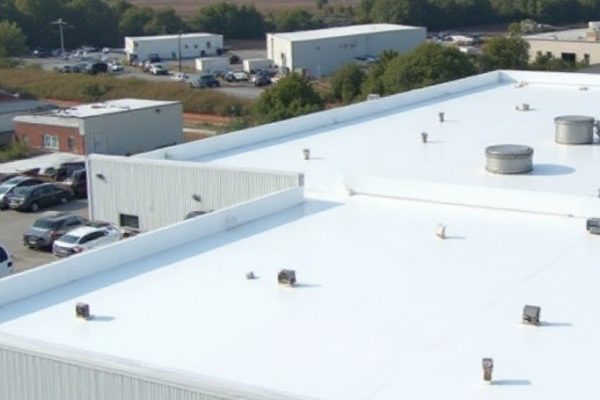
The same principle applies to businesses. A flat roof with a puncture near a drain can channel water across foam insulation. Insulation values drop fast once wet. If the crew reaches it the same day, a heat-welded patch solves the problem. If the leak runs for a week, saturated boards must come out. That means more labor, disposal, and a bigger bill. It also means downtime. Those who search for commercial roofing contractors near me during a storm are not looking for a full replacement. They want a crew with the right materials, the right safety plan, and a truck stocked for immediate containment.
How an emergency roofing visit works
The first job is to stop the water. For pitched roofs, that could mean a temporary tarp anchored at the ridge and along solid framing, not stapled into soft decking. For metal roofs, it may mean adding butyl tape and stitch screws at a seam that lost its seal, then covering with a temporary waterproof membrane. On low-slope systems, it often means finding the puncture, rolling water away, and welding a patch that meets manufacturer heat and overlap standards.
Once the roof is stable, a systematic inspection follows. The technician checks the windward edges, pipe boots, satellite mounts, and ridge lines on shingle roofs. On metal, the focus is on laps, end dams, penetrations, and movement joints. On single-ply membranes, the attention goes to drains, terminations, and anything that moves heat and expands, such as HVAC curbs. Photos document each point. For insurance claims, time stamps and wide shots matter as much as close-ups. Homeowners who call a residential roofing contractor Caddo Mills TX the day of the storm get better documentation while the damage is fresh.
The final stage is a plan. Some repairs can be finished the same visit. Others need parts or a dry window. The crew explains options with clear costs: patch and monitor, section replacement, or full slope replacement if the mat or substrate has failed across a broad area. For metal, the options could include new fasteners with oversized washers, seam reinforcement, or panel replacement for sections with stretched rib seats.
Materials behave differently under stress
Asphalt shingles in the Caddo Mills area are often Class 3 or Class 4 impact-rated. That rating helps, but it is not a shield against all hail. Heat softens shingles in summer. When hail hits a warm shingle, it may deform without cracking. When hail hits on a cold spring evening, the surface is brittle and splits more easily. The installer’s nailing pattern matters every day of the year. Nails set too high or driven at an angle reduce the shingle’s ability to stay put during uplift.
Standing seam metal roofs handle wind well if clips are spaced correctly and the seams lock as designed. The biggest failure points after storms are penetrations that someone added later: satellite anchors, new vents, or signs. Penetrations need boots and sealants that match the panel profile and the metal chemistry. Dissimilar metals can corrode the fastener and washer. That is one reason searches for metal roofing contractors near me often spike after harsh weather. People want a crew that understands thermal movement, correct sealants, and the right fastener torque.
Single-ply membranes like TPO and PVC age under UV. Seams are only as strong as the weld, and welds only remain strong if surfaces were clean during install. Hail can bruise foam under a membrane. You cannot see that bruise from the top. A trained tech feels it underfoot or checks with a core sample. That judgment comes from time on roofs, not from a desk.
What to check from the ground before calling
Homeowners do not need to climb a ladder during a storm recovery. A simple ground check gives useful clues. Look for displaced shingles along ridges, darker horizontal lines that signal creased shingles, and scattered granules at the end of downspouts. On metal roofs visible from the yard, look for flashing that has lifted at the eave or gable. Inside, check ceiling corners, light fixtures, and around vents. Musty smells after two warm days often indicate hidden moisture.
A facility manager should walk the perimeter of a commercial building. Look for membrane billow at edges, water splashing over gutters, and ponding that did not exist before. If water stands more than a quarter inch in an area that used to drain, a drain line may be blocked by hail grit. That is worth an urgent service call.
How SCR, Inc. approaches emergency work in Caddo Mills
The company’s crews know the local roof stock. In Caddo Mills subdivisions, a typical home carries a laminated architectural shingle over OSB decking. Many homes have box vents, pipe boots, and a chimney that needs step flashing. In rural areas around FM 36 and CR 2170, it is common to see R-panel and standing seam metal on barndominiums and workshops, often with long, unbroken runs that move a lot under heat. On commercial buildings near Highway 66, single-ply membranes are common, with rooftop units installed after the fact. Each roof type gets a different emergency playbook.
Response starts with safety. Storm days are slippery. Crews use fall protection and choose anchor points that can carry the load. They avoid nailing through saturated decking when installing tarps, and they aim to fasten into rafters or trusses. That approach prevents secondary damage that shows up as nail pops months later.
They then move to containment. A proper tarp extends from ridge to at least one shingle course beyond the damaged area. Edges wrap under shingle tabs where possible. On metal, temporary patches use compatible materials. On TPO, patches are clean, square, and welded on all sides with rounded corners to reduce peel. The crew documents each step for clarity and for any insurance adjuster who may follow.
Finally, they provide options with timelines. Homeowners hear straight answers about whether the roof can last through the next season or whether it needs replacement soon. Businesses receive clear repair paths that fit operational windows. Night or weekend work may cost more, but it sometimes saves a day of lost operations for a restaurant or a retail store on Highway 66. That trade-off is explained upfront.
Insurance questions that come up after storms
Texas policies differ on deductibles and coverage for code upgrades. An inspection notes whether current code requires additional ventilation, ice and water barrier in valleys, or decking upgrades. If code items apply, those become part of the scope under ordinance and law coverage, if the policy includes it. Photographs and a professional report help an adjuster understand the cause and the extent.
Time matters here too. Carriers prefer prompt mitigation. That does not mean replacing the roof before an adjuster arrives. It means stopping leaks and documenting conditions. A homeowner who delays mitigation risks claim issues. Calling emergency roofers near me is not only practical; it aligns with most policy language on preventing further damage.
Repair or replace: what experience suggests
Not every hailstorm demands a new roof. If a shingle roof shows ten to twenty hits per square in multiple test areas, replacement is likely the right path. If damage is scattered and minor, spot repairs may serve for years. For metal roofs, dents are a cosmetic issue unless they compromise seams, fasteners, or flashings. A leak around a pipe on a standing seam roof rarely justifies full replacement; a new boot and proper clamp can solve it. On TPO roofs under ten years old, localized patches often perfor